Here is a thing that should worry anyone about to buy or sell a house with a pool in the Bay of Plenty. Search “pool fence rules NZ” today and a good share of the guides that come back still tell you the law is the Fencing of Swimming Pools Act 1987. That Act was repealed on 1 January 2017. Nine years ago. Some of those pages were updated this year and still get it wrong.
That matters because pool compliance is one of the few things that can genuinely hold up a settlement, and it is usually discovered late, by a buyer’s lawyer, at the worst possible moment. This is what the rules actually are in 2026, what a pool compliance certificate is now called, and the checks worth doing before your property goes anywhere near the market.
Why pool compliance lands on your desk when a property changes hands
For most of the time you own a pool, compliance is a background task. The council writes to you every three years, someone comes and checks the gate, life goes on. The moment a property is listed, it stops being background. A buyer’s solicitor will look for the pool on the LIM, ask whether the barrier has been inspected, and want to know the result. If the answer is vague, the conditions get tighter or the price gets tested.
The same applies in reverse. If you are buying, an unfenced or non-compliant pool is not just a safety problem. It is your problem from settlement day, including any outstanding notice to fix issued to the previous owner.
The law that actually applies, and the one everyone still quotes
Residential pool safety in New Zealand sits under the Building Act 2004, as amended by the Building (Pools) Amendment Act 2016. That amendment came into force on 1 January 2017 and repealed the Fencing of Swimming Pools Act 1987 outright.
The technical standard is Building Code clause F9, Restricting access to residential pools, supported by two acceptable solutions: F9/AS1 for barriers, and F9/AS2 for safety covers on small heated pools. NZS 8500:2006 sits alongside these and deals with small heated pools and barrier strength. It is not, despite what a lot of pages claim, the rule that requires your pool to be fenced.
If a quote, a listing or an article still cites the 1987 Act as current law, treat everything else on that page with caution.
So what is a pool compliance certificate in 2026?
People still ask for a “pool compliance certificate”, and everyone knows what they mean, but the document has a different name now. Under the current regime a residential pool barrier must be inspected at least once every three years, and the inspection produces a certificate of periodic inspection when the barrier passes.
Two things commonly get confused here:
- A code compliance certificate (CCC) is issued once, when the pool and its barrier are first built and signed off under a building consent.
- A certificate of periodic inspection is the recurring one, issued every three years when the barrier is re-checked.
The three-yearly clock runs from the date the CCC was issued for the pool. So if you have just bought a place and want to know when the next inspection is due, the CCC date is where you start looking.
What the inspector actually looks at
Whether it is a council officer or an Independently Qualified Pool Inspector, the checklist is the same, and it is more detailed than most owners expect:
- Height. At least 1.2 metres, measured from the ground on the outside of the barrier.
- Gaps. Nothing wider than 100 mm anywhere in or under the barrier, including between glass panels and at gate hinges.
- The non-climbable zone. No footholds or climbable objects within 1.2 metres of the outside face. This is where most homeowners fail without realising it.
- Gates. Self-closing and self-latching from any position, swinging outward away from the pool, with the latch at least 1.5 metres above the ground.
- Doors and windows. If the house wall forms part of the barrier, any door or window opening into the pool area has its own requirements.
The non-climbable zone is the quiet killer. A barrier that passed three years ago fails this time because a pot plant, a barbecue, a stack of firewood or a newly built retaining wall has appeared within that 1.2 metre band. Nothing about the fence changed. The ground around it did.
Which pools are caught, and the one real exception
The rule applies to any residential pool capable of containing water 400 mm or more deep. Capability is the test, not what is in the pool today. A pool drained for winter still needs a compliant barrier. So does a spa pool, and so do a lot of the larger portable pools people put up over summer and assume are exempt.
There is one genuine exception. Under acceptable solution F9/AS2, a small heated pool can use a compliant, lockable safety cover instead of a barrier. The acceptable solution sets limits on this, including a water surface area of 5 square metres or less and walls at least 760 mm above the surrounding ground. It suits a spa pool. It does not get you out of fencing a family swimming pool.

Portable and inflatable pools: the summer trap
Every summer the same thing happens. A large inflatable or soft-sided pool goes up in the back yard in December, the family assumes that because it is not a permanent structure the rules do not apply, and it sits there unfenced for three months.
The rules do not care whether the pool is permanent. They care whether it can hold water 400 mm or more deep. Plenty of the bigger pools sold at hardware stores clear that easily, which puts them squarely inside the regime and means they need a compliant barrier like any other pool. Tauranga City Council publishes guidance on exactly this point, because it comes up every year.
If you are selling over summer, this one is worth a thought. A temporary pool sitting unfenced in the back yard during an open home is not a great look for a buyer who has just read the LIM, and it is a genuine compliance issue rather than a cosmetic one.
Selling: what to sort before the sign goes up
The cheapest time to fix a pool barrier is before anyone is looking at it. Once it is a condition on an agreement you have lost your negotiating position and you are working to someone else’s timeline.
- Find the paperwork. The CCC for the pool and the most recent certificate of periodic inspection. If you cannot find them, the council holds the property file.
- Work out when the last inspection was. If you are close to the three-year mark, get it done now rather than mid-campaign.
- Walk the non-climbable zone yourself. Move the furniture, the planters and the firewood. Look at what has grown.
- Test every gate. Open it to 50 mm and let go. It must close and latch on its own, every time, from any position.
- Check the hinges and latches for corrosion. On the coast this is the single most common failure.
If something is wrong, fixing it before listing turns a red flag on a LIM into a tidy certificate in the property file.
Buying: what to ask for before you sign
If the property has a pool, add these to your due diligence list:
- The CCC for the pool, which tells you when the three-yearly cycle started.
- The most recent certificate of periodic inspection, and its date.
- Any notice to fix issued against the property, and whether the work was done and re-inspected.
- Whether the pool is on the council’s register at all. An unregistered pool is its own problem.
- For a spa or small heated pool, whether compliance relies on a cover, and whether that cover is actually present and in working order.
Ask for the documents rather than assurances. “It has always been fine” is not a certificate.
What the LIM will and will not tell you
A LIM report is where a pool usually surfaces in a transaction. It will generally tell you that the council knows there is a pool on the property, and it will show consent records and any outstanding requisitions or notices.
What a LIM will not do is tell you the barrier is compliant today. It reflects what the council has on file, which may be three years old, and it does not account for the retaining wall the owner built next to the fence last spring. Read the LIM, then go and look at the fence.
If the barrier fails: notices to fix and your options
A failed inspection results in a notice to fix with a deadline. Ignore it and the council can impose a fine, and in serious cases require the pool to be emptied or covered until the barrier complies.
In practice most failures fall into three groups, and they are not equally expensive:
- Adjustment. A gate that will not self-close, a latch too low, a gap that has opened under a panel. Usually hardware and an hour or two.
- Repair. Corroded hinges, a rusted spigot, a section that has moved as the ground settled. A component replacement.
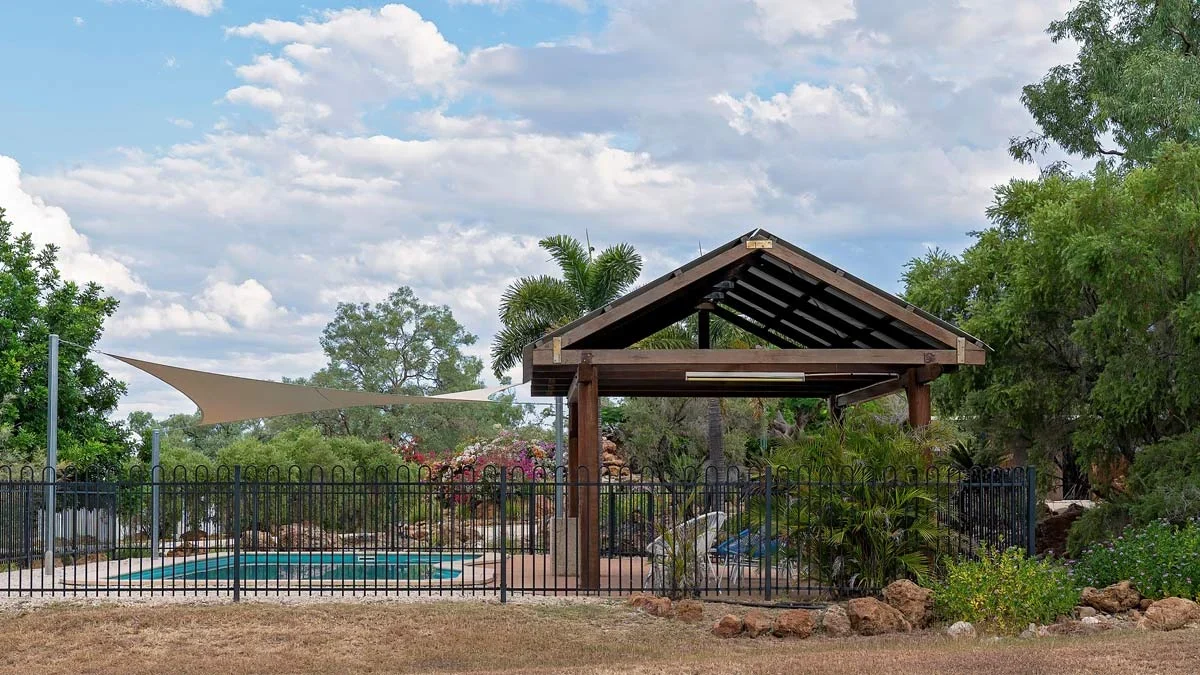
- Replacement. A barrier built to the old standard, or timber that has reached the end of its life. A new run of fencing.

That photo is what a coastal failure looks like before anyone calls it one. Rust weeping from a fixing means the fastener inside has been going for a while.
What it costs to bring a barrier up to standard
Adjustments and hardware swaps are the cheap end and often come in under a few hundred dollars. Replacement is where the real numbers sit, and it depends entirely on material and run length:
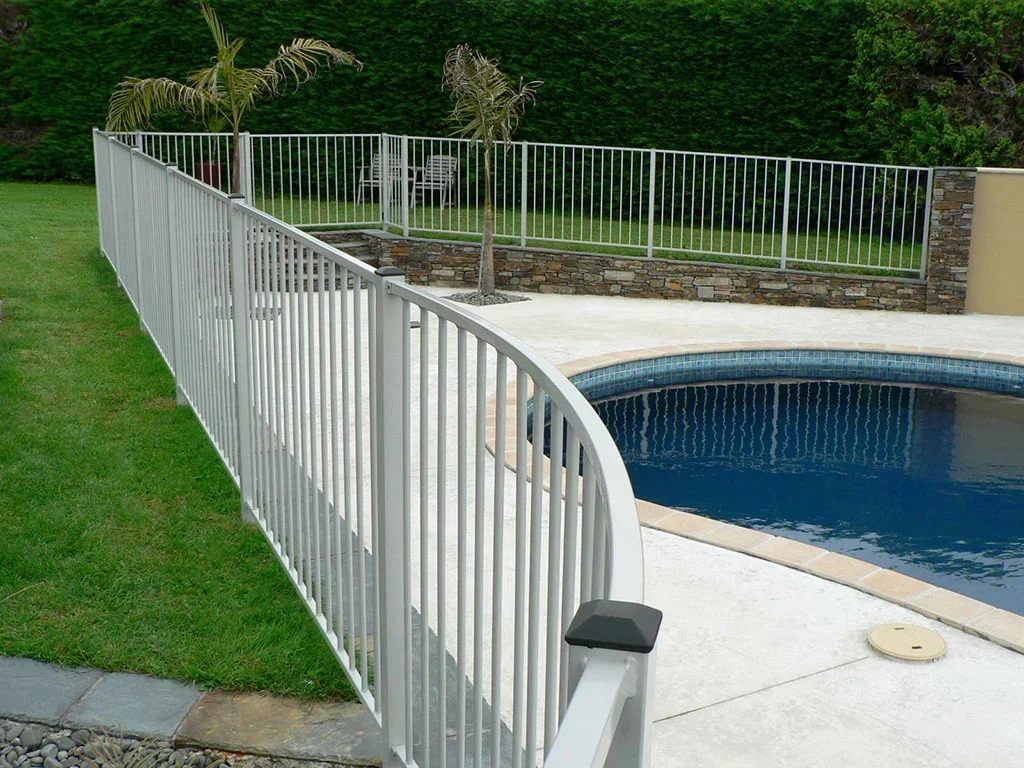
- Aluminium pool fencing: roughly $180 to $350 per lineal metre installed.
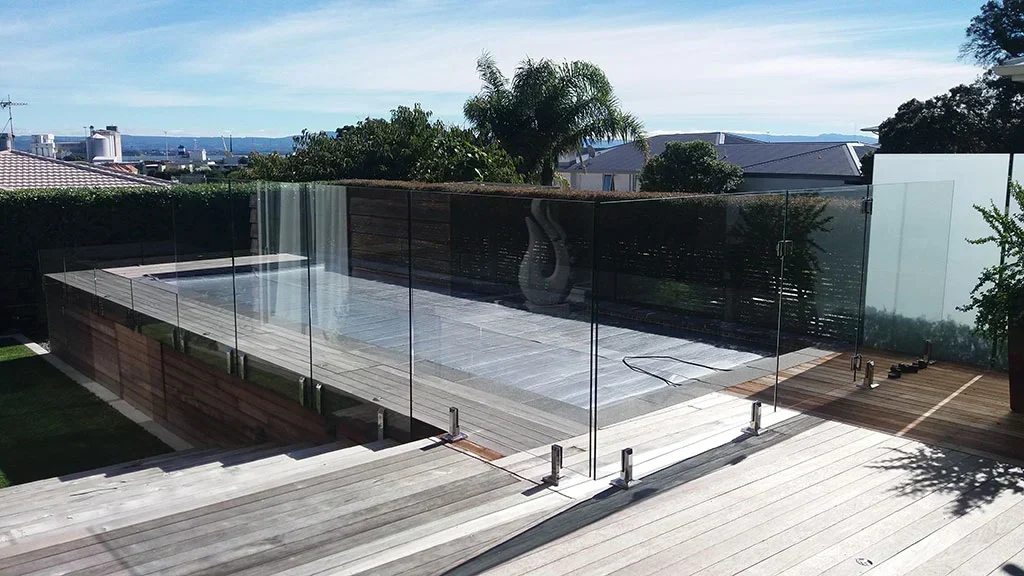
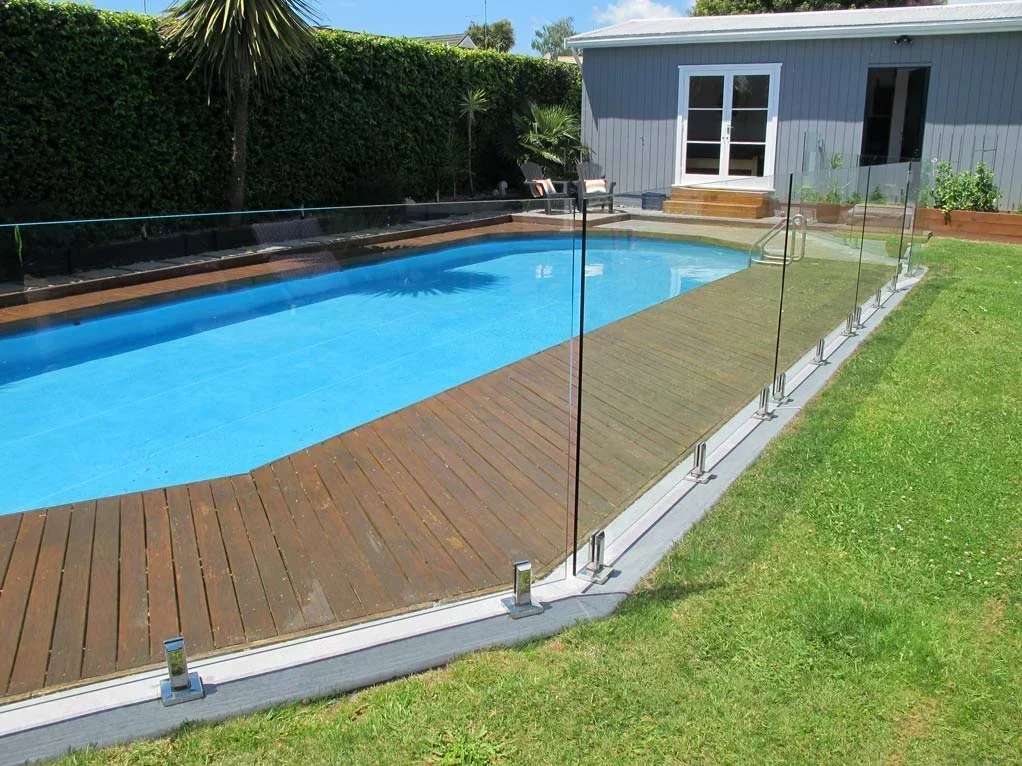
- Glass pool fencing: roughly $400 to $800 per lineal metre installed, framed at the lower end and frameless at the top.
- A typical residential pool in aluminium: usually $3,000 to $12,000 all up.
On top of that, councils charge for the inspection regime itself. Tauranga City Council applies a targeted rate to properties with a registered pool and a fee for each barrier inspection, so it is worth checking the current schedule rather than assuming. Note too that a pool barrier needs building consent. Ordinary fences up to 2.5 metres are exempt under Schedule 1, but pool barriers are specifically excluded from that exemption.
How long a fix takes when you are on a settlement clock
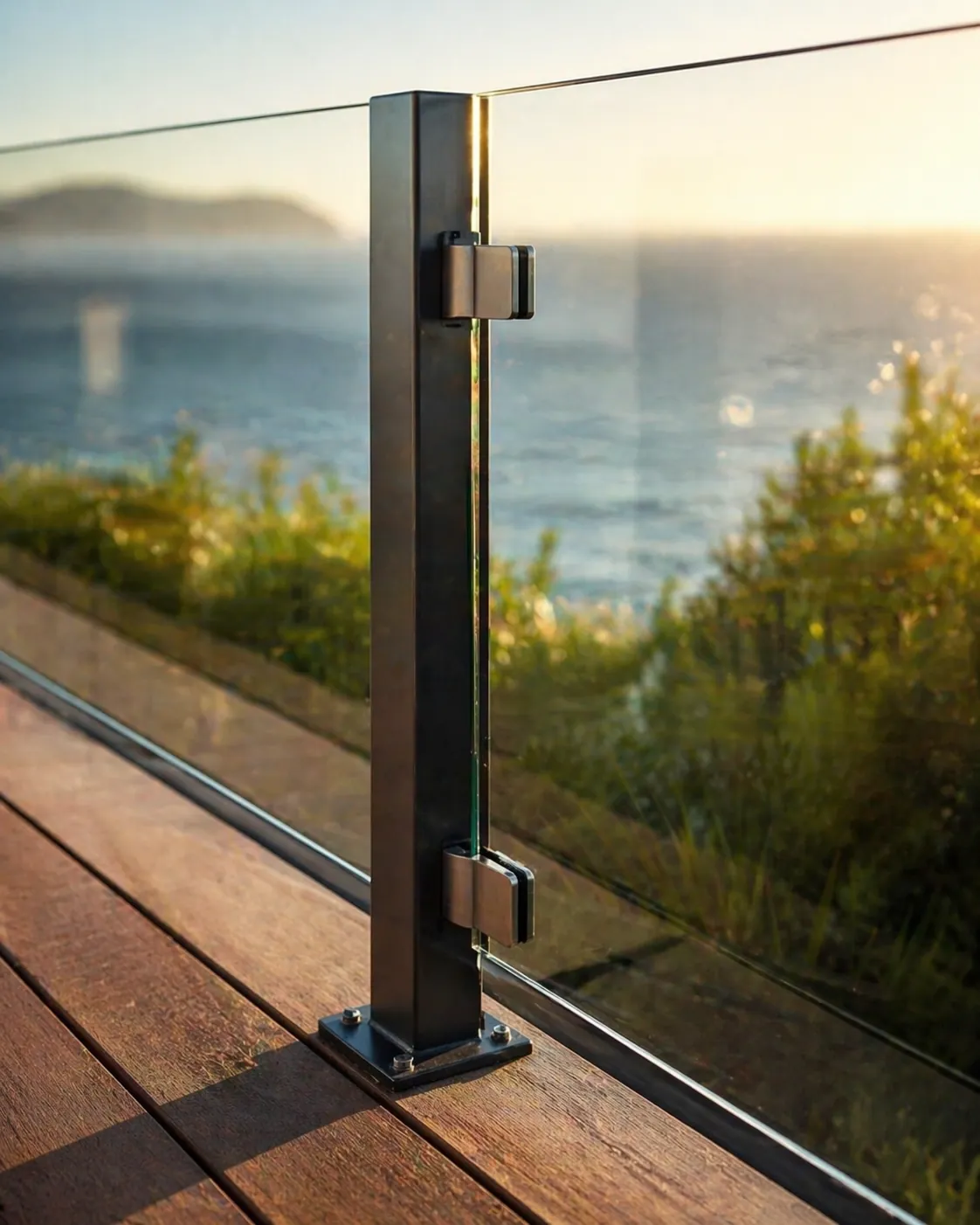
Timeframes matter more than cost when a date is already agreed. As a rough guide: hardware adjustments and gate work are usually same-week. Replacing corroded fittings depends on what needs ordering, but is typically days rather than weeks. A new run of aluminium fencing is generally quicker than glass, because glass panels are made to measure and toughened glass cannot be cut or adjusted on site once it is made.
That last point catches people out. If a frameless glass barrier needs replacing and you are four weeks from settlement, the glass lead time is the constraint, not the installation. Measure early.
Bay of Plenty: who inspects what
Which council you deal with depends on where the property sits. Tauranga City Council covers Tauranga, Mount Maunganui and Papamoa. Western Bay of Plenty District Council covers Te Puke, Katikati, Waihi Beach and the surrounding district.
Either way you can use an Independently Qualified Pool Inspector instead of the council, which is often the faster option when you are working to a settlement date.
Frequently asked questions
Is a pool compliance certificate still a thing in New Zealand?
Yes, though the correct name is now a certificate of periodic inspection. It is issued when a residential pool barrier passes its three-yearly inspection under the Building Act 2004 and Building Code clause F9.
How often does a pool fence need to be inspected in NZ?
At least once every three years. The cycle runs from the date the code compliance certificate was issued for the pool, and the inspection can be done by the territorial authority or by an Independently Qualified Pool Inspector.
Do I need a pool compliance certificate to sell my house?
There is no standalone certificate that must be handed over at settlement, but a buyer and their solicitor will almost always ask for evidence that the barrier has been inspected and passed. A current certificate of periodic inspection is the cleanest answer.
Does an empty pool still need a fence?
Yes. The requirement applies to any residential pool capable of containing water 400 mm or more deep. The test is capability, not how much water is in it, so a pool drained for winter still needs a compliant barrier.
Does a spa pool need a fence in New Zealand?
Usually it needs either a barrier or a compliant lockable safety cover. Under acceptable solution F9/AS2 a small heated pool can use a cover instead of a fence, subject to limits including a water surface area of 5 square metres or less.
What happens if my pool fence fails its inspection?
You receive a notice to fix with a deadline to bring the barrier up to standard. Failing to act can result in a fine, and in serious cases the council can require the pool to be emptied or covered until it complies.
Does a pool fence need building consent?
Yes. Ordinary fences up to 2.5 metres are covered by the Schedule 1 exemption, but pool barriers are specifically excluded from it, so a consent is part of the job.
Getting it sorted
Most pool compliance problems are small, cheap and completely fixable, right up until the moment they are attached to a settlement date. If you are listing a property with a pool, or you have just had a notice to fix land in the letterbox, the useful first step is an honest assessment of what the barrier actually needs.
We have been building compliant pool fencing across the Bay of Plenty since 2005, in aluminium and in glass. We can assess an existing barrier against F9 and tell you plainly whether it needs an adjustment, a repair or a replacement. Have a look at our pool fencing in Tauranga and glass pool fencing options, or read our fuller guide to pool fencing rules in NZ. When you are ready, get in touch for a free on-site measure and quote.