
TBGF POOL FENCING TAURANGA
In the Bay of Plenty's warm climate a compliant pool fence protects your family and lifts the look of your backyard. We design, manufacture and install pool fencing across Tauranga, Mount Maunganui, Papamoa and the wider region, in frameless glass, semi-frameless glass and powder-coated aluminium.
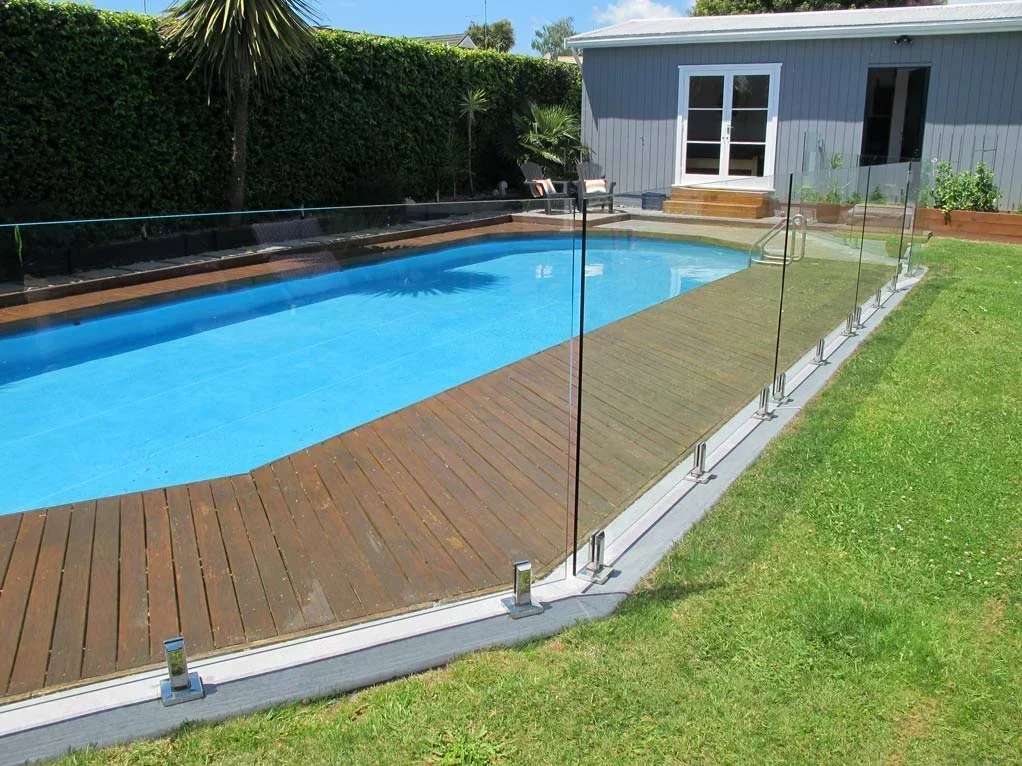
A well designed pool fence does more than meet a legal requirement. It gives you peace of mind every time the back door opens. Glass systems can meet the standard in full while keeping a clear view across the water, and aluminium delivers the same compliance with more privacy and a lower price. Whichever you choose, a quality pool fence adds to your property value and finishes your outdoor living space properly.
TBGF has been building fencing, gates and balustrades in the Bay of Plenty since 2005. Every pool fence we install is designed to meet the current Building Code, uses 100% New Zealand made aluminium where aluminium is specified, and comes with a free on-site measure and a fixed quote.
Residential pool safety in New Zealand sits under the Building Act 2004 and Building Code clause F9, Restricting access to residential pools. The Building (Pools) Amendment Act 2016 brought this in on 1 January 2017 and repealed the older Fencing of Swimming Pools Act 1987, so any quote or article still citing the 1987 Act is out of date. NZS 8500:2006 sits alongside F9 and deals with small heated pools and barrier strength, but it is not the rule that requires your pool to be enclosed.
In practice a compliant barrier means all of the following. At least 1.2 metres high, measured from the ground on the outside of the fence. No gap anywhere in or under the fence wider than 100 mm, including between glass panels and at gate hinges. No climbable objects within 1.2 metres of the outside face, which is where garden furniture, planters and retaining walls catch people out. Gates must be self-closing and self-latching, must swing outward away from the pool, and the latch must sit at least 1.5 metres above the ground.
The requirement applies to any residential pool capable of holding water 400 mm or more deep. The test is capability, not how much water is in it today, so a pool drained for winter still needs a compliant barrier. Pool barriers also need building consent: ordinary fences up to 2.5 metres are exempt under Schedule 1, but pool barriers are specifically excluded from that exemption. We can supply the specification your consent application needs, and our guide to pool fencing rules in NZ covers the detail.
Three systems cover almost every Bay of Plenty pool. The right one depends on your view, your budget and how exposed the site is.
For a sleek modern look, frameless glass is hard to beat. Panels of 12 mm toughened safety glass are held by stainless spigots set into the deck or concrete, with no posts and no top rail, creating a barrier that does not interrupt the view. Because there is no frame carrying the load the glass itself is structural, so panel thickness, spigot spacing and the substrate all have to be right. It is the premium option for homeowners who want safety without compromising the outlook. See our glass pool fencing Tauranga page for the full detail.

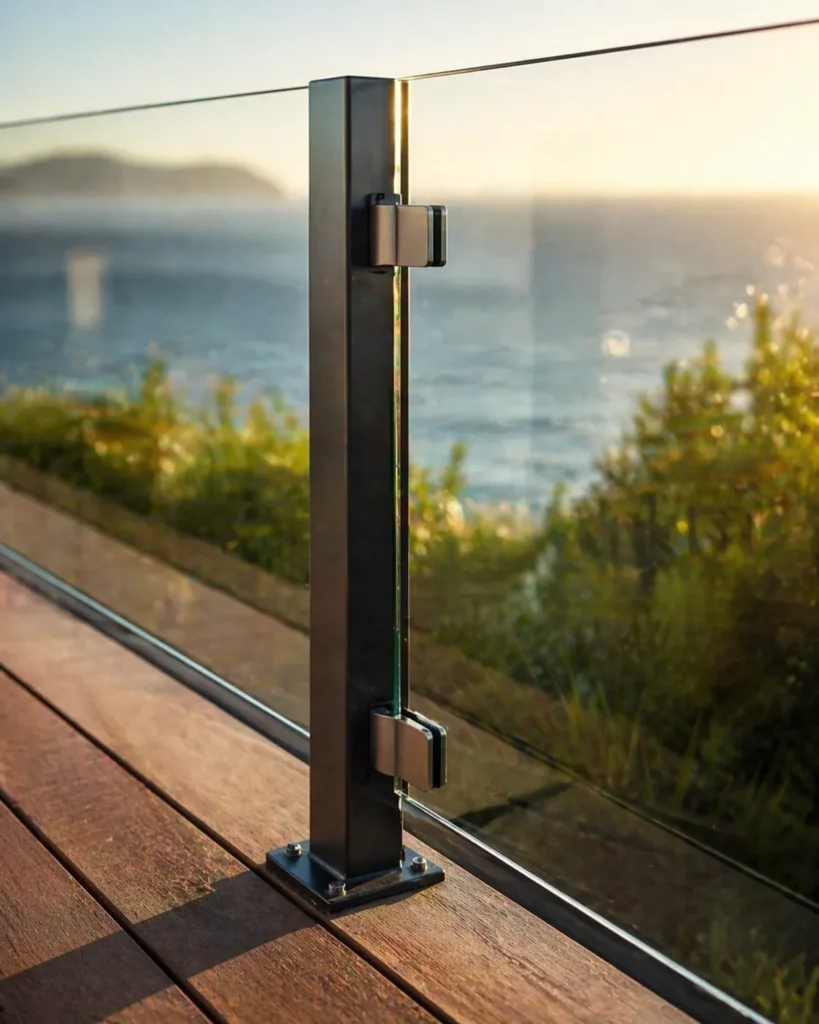
Semi-frameless blends the openness of glass with a lower price. Glass panels are supported by slim posts or clamps, giving a clear sight line and strong protection while sharing the structural load, which allows thinner glass and wider spacing. The posts can be powder-coated to match your joinery or your house colour. For long runs around a larger pool it is usually the best value of the three.
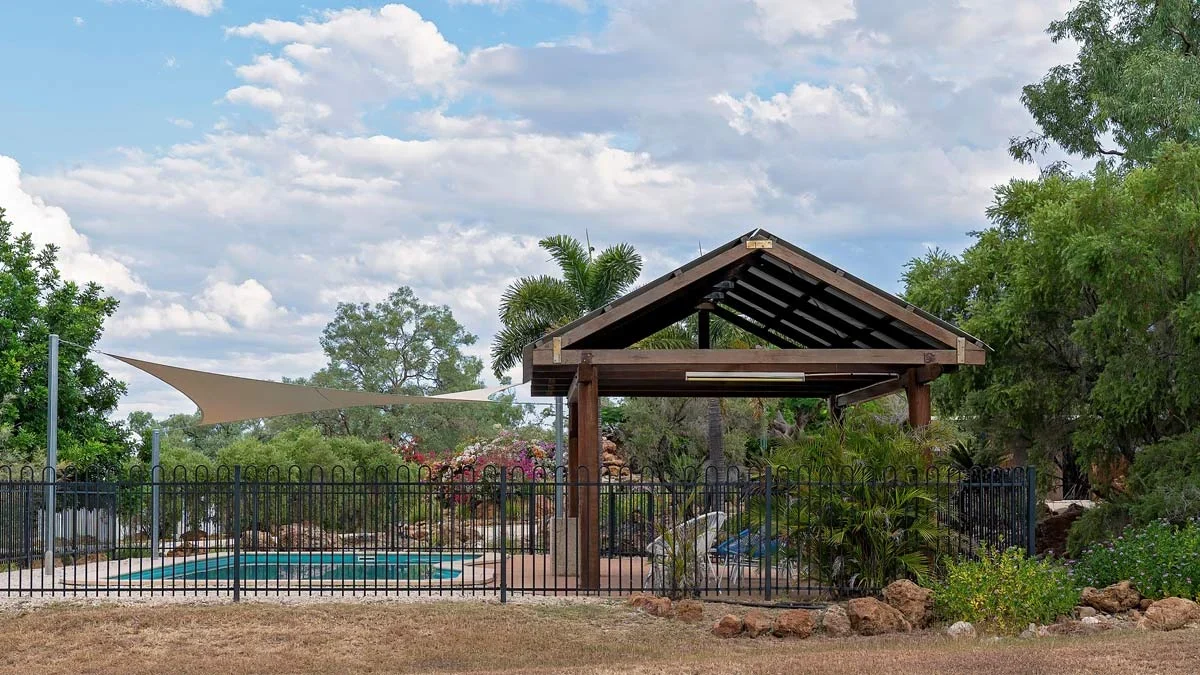
Aluminium remains the most popular choice for strength, versatility and value. Styles run from flat-top to tubular, and raking panels can follow sloping ground so the fence sits level with the site rather than stepping awkwardly. Powder-coated finishes in a wide range of colours let the fence match the house while delivering robust security, and purpose-built pool panels arrive with compliant bar spacing already engineered in.
Every job is quoted after an on-site measure, but these are the ranges we are installing at across the Bay of Plenty right now.
Aluminium pool fencing
$180 to $350
per lineal metre, installed
Glass pool fencing
$400 to $800
per lineal metre, installed
Typical residential pool
$3,000 to $12,000
total for an aluminium fence
What moves a quote is rarely the panels. It is the substrate and the levels: core drilling into existing concrete, building a footing where a deck will not carry spigot loads, gate hardware, and any run that steps down a slope. Glass sits at the top of its range when it is frameless, and at the lower end when it is framed. We quote fixed after measuring on site, so the number you accept is the number you pay.
Coastal Bay of Plenty is hard on metal. Airborne salt from the Mount through Papamoa and out to Pukehina finds every fixing, and the failures we get called to repair are almost always hardware failures rather than glass or panel failures. A corroding spigot weeping rust down a glass panel is the classic symptom, and by the time it shows the fitting is usually already compromised.
For coastal sites we specify 316 marine-grade stainless for spigots and fittings rather than the cheaper 304 grade, and coastal-grade Duratec powder coating on aluminium, backed by our 5-year coating guarantee. Rinsing hardware with fresh water a few times a year meaningfully extends its life, and we will show you what to look for when we hand the job over.
Tauranga City Council and Western Bay of Plenty District Council inspect residential pool barriers at least once every three years. The cycle runs from the date the code compliance certificate was issued for the pool, and the inspection can be carried out by the council or by an Independently Qualified Pool Inspector.
If a barrier fails you receive a notice to fix with a deadline. The common failures here are gates that no longer self-close because the hinges have corroded, vegetation or furniture that has crept inside the non-climbable zone, and gaps opening under a fence as the ground moves. If you have had a notice, or you have just bought a property with a pool and are not sure where it stands, we can assess the existing barrier against F9 and tell you honestly whether it needs replacing or adjusting.
Residential pool safety is set by the Building Act 2004 and Building Code clause F9, which replaced the Fencing of Swimming Pools Act 1987 on 1 January 2017. The barrier must be at least 1.2 metres high measured from the outside, have no gap anywhere exceeding 100 mm, and have no climbable objects within 1.2 metres of the outside face. Gates must be self-closing and self-latching, open away from the pool, and have the latch at least 1.5 metres above the ground.
Yes. Ordinary fences up to 2.5 metres are covered by the Schedule 1 exemption and do not need consent, but pool barriers are specifically excluded from that exemption. Consent is part of the job, and we can supply the specification your application to Tauranga City Council or Western Bay of Plenty District Council needs.
Yes, if it can hold water 400 mm or more deep. The test is capability, not how much water is in it, so a pool drained for winter still needs a compliant barrier. Small heated pools and spa pools are the one exception: under acceptable solution F9/AS2 a compliant lockable safety cover can be used instead of a fence, subject to limits including a water surface area of 5 square metres or less.
Aluminium pool fencing typically runs from $180 to $350 per lineal metre installed, and glass pool fencing from $400 to $800 per lineal metre depending on whether it is framed, semi-frameless or frameless. Most residential pools in aluminium land between $3,000 and $12,000 in total. We quote fixed after a free on-site measure.
At least once every three years. The cycle runs from the date the code compliance certificate was issued for the pool, and the inspection is carried out either by the territorial authority or by an Independently Qualified Pool Inspector. A failed inspection comes with a notice to fix and a deadline to meet.
Yes. Glass is held to exactly the same F9 requirements as aluminium. We use 12 mm toughened safety glass, and the detail that matters most is the 100 mm rule: the gaps between panels, under the bottom edge and at the gate hinge all have to stay under 100 mm.
We install pool fencing across Tauranga, Mount Maunganui, Papamoa, Te Puke, Katikati, Waihi and Whangamata.
Tell us about your pool and we will come and measure, talk through glass against aluminium, and give you a fixed quote. Free on-site measurement anywhere in the Bay of Plenty, and 100% New Zealand made aluminium as standard.
Get in touch


