In the Bay of Plenty, and across New Zealand, building a fence is not just about style. It is about safety, regulations, and long-term performance. Get the legal side wrong and you can face a notice to fix from the council, an argument with your neighbour over who pays, or a fence you have to take down and build again. At TBGF we have been building fences across Tauranga and the wider Bay of Plenty since 2005, and this guide sets out the rules that matter most to homeowners.
Pool safety: Building Code clause F9
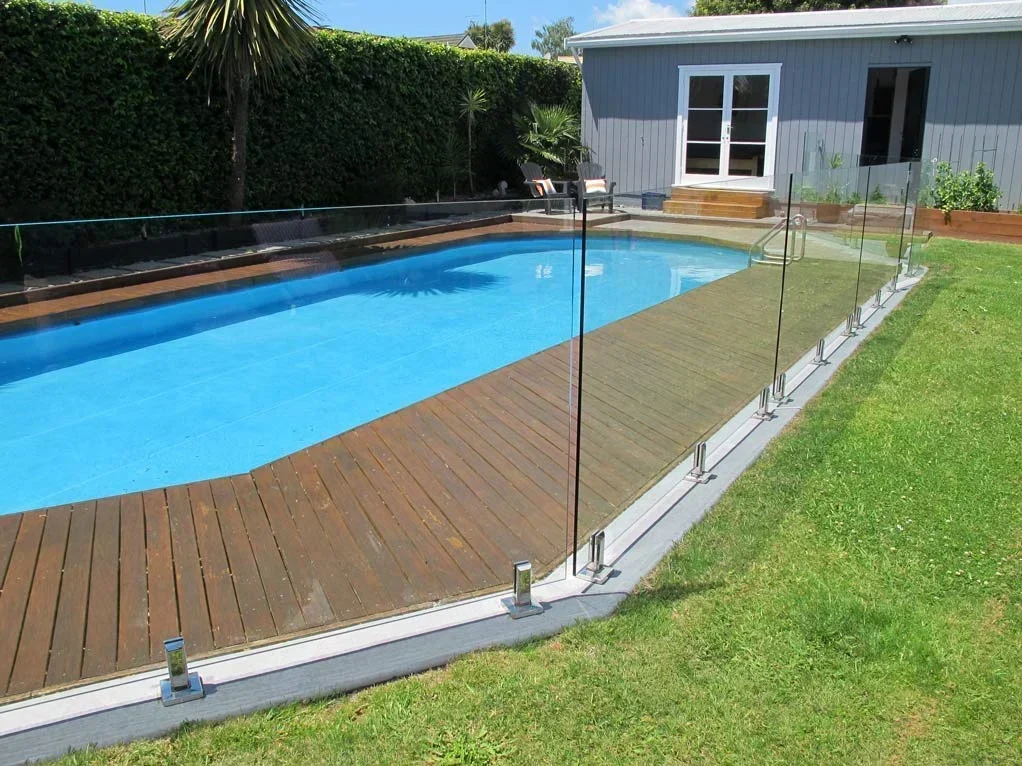
Protecting children around pools is non-negotiable, and it is the one area of fencing law where councils actively inspect. Residential pool safety sits under the Building Act 2004 and Building Code clause F9, which replaced the old Fencing of Swimming Pools Act 1987 on 1 January 2017.
- All residential pools must have a physical barrier that stops unsupervised access by children under five.
- Barriers must fully enclose the pool area, be at least 1.2 m high, and be unclimbable.
- Gaps must be no more than 100 mm wide.
- Pool gates must swing outward, be self-closing, and have latches 1.5 m above ground.
- Pool barriers need building consent. Ordinary fences up to 2.5 m are exempt, but pool barriers are specifically excluded from that exemption.
The rule applies to any pool capable of holding water 400 mm or more deep, so a drained or part-filled pool still needs a compliant barrier. For a fuller explanation of the current rules, see our guide to pool fencing rules in NZ, or read about our pool fencing in Tauranga.
Fence height and building consent
Height is where most homeowners trip up, because two separate sets of rules apply and they are easy to confuse.
- Fences up to 2.5 m generally do not need building consent under Schedule 1 of the Building Act, with pool barriers the key exception.
- Most residential boundary fences are built at 1.8 m, which sits comfortably inside that exemption.
- Front yard fences are often restricted to 1.2 m for sightlines and safety.
- Always confirm with your local council before you start.
District plan rules and resource consent
Building consent is only half the picture. Even when a fence is exempt from building consent, your district plan can still control how tall it is and where it sits. This is a resource consent question rather than a building consent one, and it catches people out regularly.
As a general rule across Tauranga City and Western Bay of Plenty District, fences over 2 m in a residential zone need resource consent, and fences in a front yard or road boundary setback are usually limited to somewhere between 1.2 m and 1.5 m so that drivers and pedestrians can see clearly at driveways and corners. Corner sites often have an additional sight triangle where nothing solid can be built above about 1 m.
Height is normally measured from the ground level on the lower side of the fence, which matters on the sloping sections common in Welcome Bay, Ohauiti and the Mount. A 1.8 m fence built on top of a 600 mm retaining wall can be treated as a 2.4 m structure, which can tip an otherwise straightforward job into needing consent. Heritage overlays, coastal and outstanding natural landscape areas can all add further limits.
The practical advice: if you are going above 2 m, building on or near a retaining wall, or fencing a front boundary or corner site, check the district plan rules before you order materials. A five-minute call to the council planning duty officer is cheaper than rebuilding.
Boundary fences and the Fencing Act 1978
Boundary fences between neighbouring properties are governed by the Fencing Act 1978. The core principle is straightforward: where two properties are not divided by an adequate fence, the adjoining owners are liable to contribute in equal proportions to the work on a fence. Neither neighbour can simply send the other an invoice, though. The Act sets out a process, and following it is what makes the cost shareable.
What a fencing notice must contain
If you want your neighbour to contribute, you must serve a fencing notice first. The Act specifies a form, and the notice must:
- Specify the boundary, or the parts of the boundary, where the work will be done.
- Describe the proposed work in enough detail that your neighbour can understand the nature of the work and the materials, and estimate the cost.
- State the consequences of failing to respond to the notice.
- Set out the proposed shares if the cost is to be split other than equally.
Work you do before serving the notice is generally at your own cost, so serve it before you start, not after.
If your neighbour objects
Your neighbour has 21 days from the date the notice is served to object. They do that by serving a cross-notice, which can include counter-proposals, for example a different material or a lower specification. If a cross-notice arrives, the two of you need to reach agreement before the work proceeds. If no cross-notice is served within the 21 days, you can proceed on the terms in your notice and seek the agreed contribution.
Who pays for a pool fence
Pool fencing is treated differently, and it is worth knowing. Where fencing work is required only to comply with the pool safety rules in the Building Act, that extra work is the responsibility of the pool owner. A neighbour cannot be made to contribute more than they would have paid toward an ordinary boundary fence had the pool not existed. In short, the pool is your project, not theirs.
When a boundary fence becomes a dispute
Most fencing disagreements are about cost, materials or the exact line of the boundary. The usual order of events is:
- Talk first. Most disputes are resolved before any notice is served. Put what you agree in writing, even if it is just an email.
- Serve the notice. The formal process exists precisely because informal agreements break down.
- Check the boundary. If the line itself is in question, a registered surveyor is the only way to settle it. Fences are frequently not on the legal boundary, and a long-standing fence does not move the title.
- Disputes Tribunal. The Tribunal can hear fencing disputes and make binding orders, currently up to a limit of $60,000. It is low cost and does not require a lawyer.
- District Court. Larger or more complex matters go to the District Court.
A surveyor’s report and a properly served notice are worth far more than a long email chain if a dispute does end up in front of the Tribunal.

Frequently asked questions
Q: How tall must pool fencing be in NZ?
A: At least 1.2 m and unclimbable. Gaps must be no more than 100 mm wide.
Q: Do I need a consent for a 2 m fence?
A: Generally you do not need building consent, because the exemption runs to 2.5 m. You may still need resource consent, as most district plans limit residential fences to 2 m. Pool barriers always require building consent.
Q: Who pays for a shared boundary fence?
A: Adjoining owners are liable to contribute in equal proportions to an adequate fence, provided a fencing notice has been served under the Fencing Act 1978. Work done before the notice is served is at your own cost.
Q: What if my neighbour will not pay?
A: Serve a fencing notice. If no cross-notice objecting to it arrives within 21 days, you can proceed and seek their share. Unresolved disputes can go to the Disputes Tribunal.
Q: Does my neighbour have to help pay for my pool fence?
A: No. Fencing work required only to meet the pool safety rules is the responsibility of the pool owner. Your neighbour contributes no more than they would have toward an ordinary boundary fence.
Fencing across the Bay of Plenty
TBGF designs, manufactures and installs aluminium fencing in Tauranga and throughout the region:
- Tauranga Fencing
- Mount Maunganui Fencing
- Papamoa Fencing
- Te Puke Fencing
- Katikati Fencing
- Waihi Fencing
- Whangamata Fencing
Getting it right
Fencing in New Zealand is not just about dividing property. It is about doing it safely, legally and once. Serve the right notice, check both your building consent and district plan position, and build to a standard that will still be sound in fifteen years of Bay of Plenty salt air. If you want a hand with any of that, get in touch for a free on-site quote.